How to Choose a Dune Buggy for Dubai's Sand Dunes
Know What You Are Riding Into
Dubai's desert is not a flat track. It is a stretch of shifting sand dunes, steep drops, and soft patches that can swallow a wheel in seconds. The buggy you pick needs to handle that terrain, not just look like it can. Before you start comparing models or colours, take a moment to understand the conditions you will face. Sand dunes are unpredictable. The surface changes with every gust of wind, and what was a firm slope in the morning can become a loose slide by midday. Your buggy's weight, tyre type, and engine power all matter more here than they would on a hard-packed trail.
Step One: Decide Between a Single-Seater and a Two-Seater
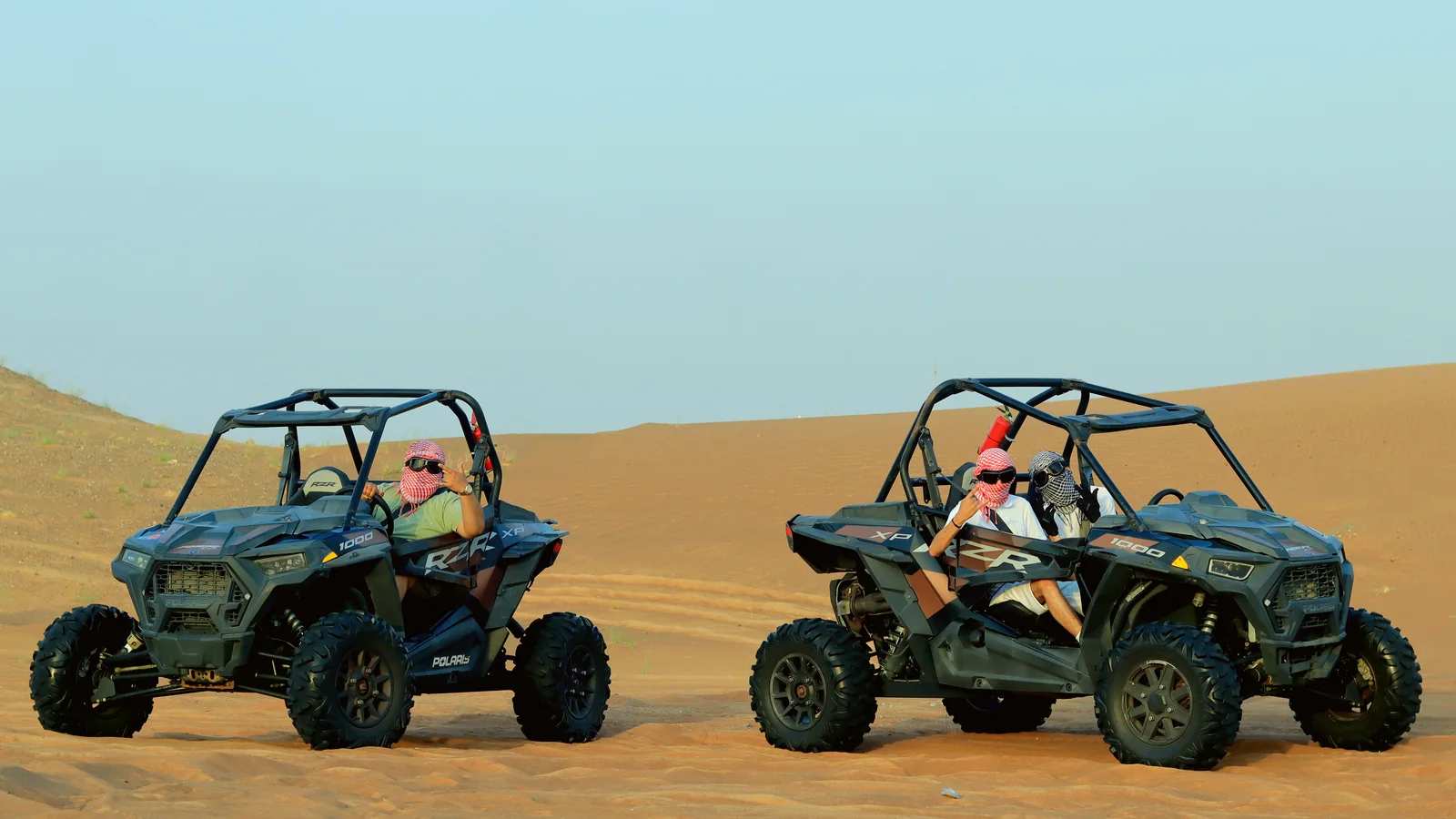
The first decision is about capacity. A single-seater buggy is lighter and more manoeuvrable. It can dart up a dune face and turn quickly at the crest. If you plan to drive alone and want maximum agility, this is the right choice. A two-seater adds weight and length, which changes how the buggy handles. It is less responsive on tight corners, but it lets you share the experience with a passenger. Some two-seaters place the passenger beside the driver; others put them behind. Side-by-side seating keeps the centre of gravity lower, which helps on steep slopes. Tandem seating can feel more unstable because the weight is stretched out. Whichever you choose, make sure the seating position gives you a clear view of the ground ahead. You need to see the sand texture, the small ridges, and the soft spots before you hit them.
Step Two: Look at the Tyres and Tread Pattern
Tyres are the part of the buggy that actually touches the sand. The tread pattern and width affect traction more than engine power does. Wide, paddle-style tyres are common on dune buggies designed for deep sand. The paddles dig in and push the buggy forward, preventing it from sinking. However, paddle tyres can be tricky on hard-packed sections or when you need to turn sharply. A more versatile option is a wide, low-pressure tyre with a shallow tread. These tyres spread the buggy's weight over a larger area, which helps it float on top of the sand rather than dig in. Check the tyre pressure too. Lower pressure increases the footprint and improves grip, but too low a pressure risks damaging the rim on a hard landing. Many desert buggy operators set their tyres to around 10 to 15 PSI for dune riding. If you are renting, ask what pressure the buggy uses and whether it has been adjusted for that day's conditions.
Step Three: Evaluate the Engine and Drive System
Engine size matters, but it is not the only number to watch. A buggy with a powerful engine can climb dunes more easily, but it also uses more fuel and generates more heat. In the desert, heat is a real problem. Engines that run hot can lose power or stall when you need them most. Look for a buggy with an efficient cooling system. Air-cooled engines are common and simple, but they can struggle in extreme heat. Liquid-cooled engines maintain a more consistent temperature, which helps on long rides. The drive system also affects performance. A direct-drive system sends power straight to the wheels with fewer moving parts. It is reliable and responsive. A belt-driven system can absorb some shock, which makes the ride smoother, but belts can snap under heavy load. If you plan to push the buggy hard, direct drive is usually the safer bet.
Step Four: Check the Safety Gear and Restraints
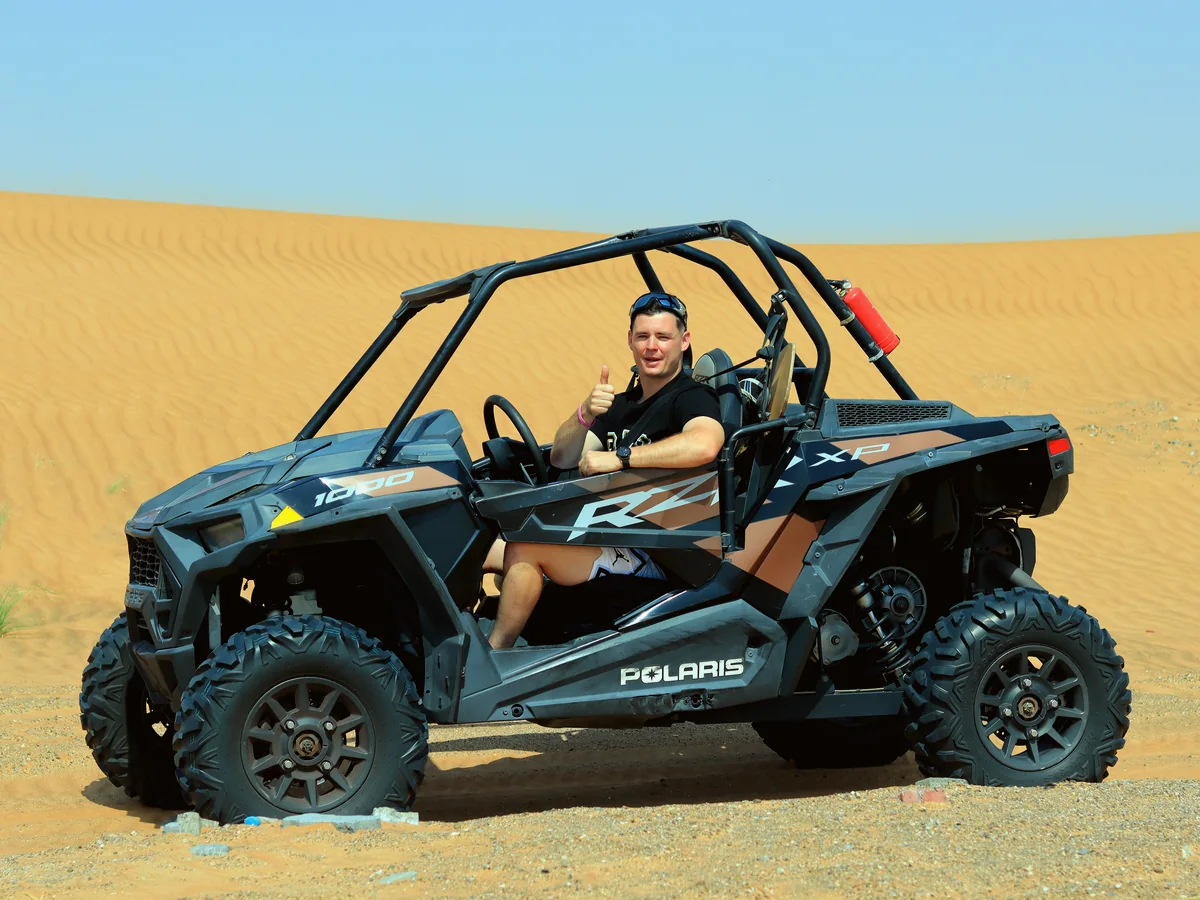
Dune buggy riding carries inherent risks. A rollover is possible on steep slopes, and the impact of hitting a hidden dip at speed can jolt the spine. The buggy should come with a proper safety harness, not just a lap belt. A four-point or five-point harness keeps you secured to the seat, reducing the chance of injury if the buggy tips. The frame matters too. Look for a roll cage that surrounds the driver and passenger. The cage should be made of welded steel or aluminium, with no sharp edges inside the cockpit. Helmet and goggles are non-negotiable. Sand gets everywhere. A helmet with a visor protects your face, and goggles keep the dust out of your eyes. Some buggies also have a kill switch attached to the driver. If you are thrown from the seat, the engine cuts off immediately. That feature alone can prevent a runaway buggy from causing more damage.
Step Five: Consider the Buggy's Age and Maintenance History
A well-maintained older buggy can outperform a neglected new one. Ask about the maintenance schedule. How often are the tyres changed? When was the engine last serviced? Are the brake lines and cables in good condition? Sand is abrasive. It wears down moving parts faster than dirt or asphalt. Wheel bearings, suspension joints, and brake components all need regular attention. If the buggy has been sitting unused for months, seals can dry out and rubber parts can crack. A rental fleet that rotates buggies regularly is usually a good sign. You can also look at the buggy's overall condition. Check for rust on the frame, frayed seat belts, and cracked plastic around the controls. Small signs of neglect often point to bigger problems underneath.
Step Six: Match the Buggy to Your Experience Level
Not all dune buggies are beginner-friendly. Some have a very responsive throttle that can surprise a new driver. Others have a heavy clutch that requires a firm hand to engage smoothly. If you are new to off-road driving, look for a buggy with a progressive throttle and a low centre of gravity. A buggy that is too powerful for your skill level can be dangerous. You might accelerate too fast on a downhill slope or spin the wheels on a loose section and lose control. Many rental places offer a short orientation ride. Take it. Use that time to feel the buggy's weight, its turning radius, and how it reacts when you lift off the throttle. A good buggy should feel predictable. If it lurches or drifts in a way that catches you off guard, consider a different model.
Step Seven: Review the Booking and Support Details
Once you have a buggy in mind, look at the practical side of booking. How long is the tour or rental period? Does the price include fuel, or do you pay extra? What happens if the buggy breaks down during the ride? A reputable operator will have a support vehicle or a recovery plan. It is also worth confirming what safety briefing you will receive. A proper briefing covers the buggy's controls, the hand signals used by guides, and the basic rules of dune etiquette. For example, you should never stop at the bottom of a dune where another buggy might come over the crest. You should also maintain a safe distance from the buggy ahead, because sand kicked up by its tyres can reduce visibility to zero. One local option is Buggy Ride Dubai - Quad Bike ATV & Dune Buggy Tours. Their official site provides details on the buggies they use and the desert areas they cover. Checking their Buggy Ride Dubai - Quad Bike ATV & Dune Buggy Tours official site before you book can help you confirm that the equipment matches what you are looking for.
Final Checks Before You Ride
Before you set off, do a quick walk-around of the buggy. Check the tyre pressure visually - if the tyres look flat or overly bulging, ask for an adjustment. Test the brakes while the buggy is stationary. They should feel firm, not spongy. Make sure the seat is securely latched and that the harness buckles easily. If you are riding with a passenger, confirm that their side of the buggy has the same safety features as the driver's side. It is also wise to dress for the conditions. Long sleeves and trousers protect your skin from the sun and from the heat of the engine bay. Closed-toe shoes with a good grip are essential. Sandals or flip-flops have no place on a dune buggy.
Choosing the right dune buggy for Dubai's sand dunes comes down to matching the machine to the terrain and your own skill. Start with the seating capacity, then move to the tyres and engine. Check the safety gear and the buggy's maintenance record. Take a test ride if possible. And when you book, confirm that the operator has a clear support plan. The desert is a beautiful but demanding environment. A well-chosen buggy makes the experience thrilling rather than stressful.
Buggy Ride Dubai - Quad Bike ATV & Dune Buggy Tours is located at The One Tower - Office No. 2513 25th Floor - Al Thanyah First - Barsha Heights - Dubai - United Arab Emirates.
Buggy Ride Dubai - Quad Bike ATV & Dune Buggy Tours is also on Instagram.